Plastic, Reconstructive and Aesthetic Surgery
The plastic, reconstructive and aesthetic surgery unit offers expert care in facial aesthetics, breast aesthetics, burn treatment and reconstructive surgery.
Plastic, reconstructive, and aesthetic surgery is a comprehensive surgical specialty aimed at improving the appearance and functionality of the human body. Congenital anomalies, post-traumatic deformities, tissue losses following tumor surgery, and age-related changes constitute the primary areas of focus for this branch. The Koru Hospital Department of Plastic, Reconstructive, and Aesthetic Surgery offers modern treatment options to its patients with an experienced staff across all sub-branches of reconstructive and aesthetic surgery.
What is Reconstructive Surgery?
Reconstructive surgery is a surgical discipline that aims to repair structural defects occurring in any part of the body and to restore function. Congenital anomalies, burns, traumas, infections, and tissue defects resulting from cancer surgery are the primary indications for reconstructive surgery. The fundamental goal of these interventions is to optimize both the patient's physical functions and aesthetic appearance.
In reconstructive surgery, tissue repair is performed across a wide spectrum, ranging from simple wound closure techniques to complex free tissue transfers. In this systematic approach, known as the reconstructive ladder, treatment options are evaluated from the simplest to the most complex. Primary closure, skin grafts, local flaps, regional flaps, and free tissue transfer via microsurgery constitute the steps of this ladder.
Facial and Head-Neck Reconstruction
The facial region is the most critical anatomical area that directly affects a person's identity and social interaction. Facial traumas, defects following tumor surgery, congenital anomalies, and burn sequelae are the primary indications for facial reconstruction. In the repair of facial fractures, the skeletal structure is reconstructed using titanium plate-screw systems, while aesthetically acceptable results are achieved in soft tissue losses using local and free flaps.
The treatment of congenital anomalies such as cleft lip and palate, craniofacial anomalies, and ear deformities requires a multidisciplinary team approach. In the treatment of cleft lip and palate, a planned surgical protocol is implemented from birth, and multiple operations are performed during the patient's growth process. In this process, coordinated work with a speech therapist, orthodontist, otolaryngologist, and psychologist is of great importance.
Breast Surgery
Breast surgery is an important sub-field of plastic surgery that encompasses both reconstructive and aesthetic dimensions. Breast reconstruction following mastectomy performed due to breast cancer significantly improves the quality of life and psychological well-being of female patients. Reconstruction can be performed using implant-based methods or autologous tissue transfer.
In implant-based breast reconstruction, the placement of a tissue expander followed by a permanent silicone implant is the most commonly applied technique. In reconstruction with autologous tissue, methods such as TRAM flap, DIEP flap, or latissimus dorsi flap are used. Specifically, the DIEP flap is performed by transferring skin and adipose tissue taken from the abdominal region to the breast area using microsurgical techniques, providing natural-looking, permanent results.
Within the scope of aesthetic breast surgery, breast augmentation (augmentation mammaplasty), breast reduction (reduction mammaplasty), and breast lift (mastopexy) surgeries are performed. In these operations, a personalized surgical plan is created by evaluating the patient's body structure, expectations, and anatomical characteristics.
Hand Surgery and Peripheral Nerve Surgery
Hand surgery is one of the sub-branches of plastic surgery that requires the highest level of precision. Due to the complex anatomical structure of the hand, where bones, joints, tendons, nerves, and vessels are located together in a small area, microsurgical techniques are frequently used in surgical interventions. In traumatic hand injuries, emergency interventions such as finger replantation, tendon repair, and nerve repair are performed.
Carpal tunnel syndrome, cubital tunnel syndrome, and other entrapment neuropathies are among the most common conditions encountered in hand and upper extremity surgery. In these diseases, surgical release of the area where the nerve is compressed provides significant improvement in patients' symptoms. In peripheral nerve injuries, nerve repair or nerve graft application is performed using microsurgical techniques. Surgical interventions performed at an early stage in pediatric patients with congenital hand anomalies also support the functional development of the hand.
Burn Treatment and Wound Care
Burn injuries are one of the most challenging areas of plastic surgery requiring urgent intervention. Thermal burns, chemical burns, electrical burns, and radiation burns cause tissue damage through different mechanisms. While fluid resuscitation, wound care, and infection control are of vital importance in the early stage of burn treatment, scar revision and reconstructive surgery come to the fore in the late stage.
Skin grafts, dermal matrices, and bioengineered artificial skin substitutes are used to close large burn wounds. In the treatment of burn scars, various methods such as pressure garments, silicone products, laser therapy, and surgical scar revision are applied. Chronic wounds, pressure ulcers, and diabetic foot ulcers are also among the important clinical conditions evaluated within the scope of plastic surgery wound care.
Aesthetic Surgery Applications
Aesthetic surgery encompasses surgical interventions performed to improve a person's appearance and increase their self-confidence. Surgeries such as facial rejuvenation, rhinoplasty, blepharoplasty, abdominoplasty, and liposuction are the most frequently performed procedures in aesthetic surgery. In these operations, it is of great importance to maintain a natural appearance and balance the patient's expectations with realistic results.
In facial rejuvenation surgery, facelift (rhytidectomy) surgery is an effective method for correcting sagging and wrinkles. Endoscopic forehead lift, upper and lower eyelid aesthetics (blepharoplasty), and neck lift surgeries are also among facial rejuvenation procedures. Non-surgical methods such as fillers and botulinum toxin injections are increasingly being used in facial rejuvenation with minimally invasive approaches.
Rhinoplasty (Nose Aesthetics)
Rhinoplasty is one of the most common aesthetic surgical procedures performed for both aesthetic and functional purposes. By reshaping the bone and cartilage structure of the nose, the size, shape, and proportions of the nose are improved. Open and closed rhinoplasty techniques are preferred according to the patient's anatomical structure and the scope of the planned changes.
Functional rhinoplasty includes the correction of structural problems that lead to nasal obstruction, such as septum deviation and turbinate hypertrophy. Revision rhinoplasty is performed to correct previously performed nose surgeries and requires high surgical experience. Thanks to computer-aided simulation programs, patients can visually evaluate possible results before the surgery.
Body Contouring
Body contouring surgery aims to improve body contour by removing excess skin and adipose tissue. Abdominoplasty, liposuction, brachioplasty, thigh lift, and body lift surgeries are the primary operations in this category. Especially skin excess occurring after massive weight loss constitutes the most common indication for these surgeries.
Liposuction is performed by aspirating regional fat deposits in the body via cannulas. Advanced techniques such as ultrasound-assisted liposuction (VASER), laser-assisted liposuction, and power-assisted liposuction ensure that adipose tissue is removed in a more controlled and homogeneous manner. Fat injection (lipofilling) provides both a filling and regenerative effect by transferring processed adipose tissue to areas with volume loss.
Non-Surgical Aesthetic Applications
In modern plastic surgery, non-surgical aesthetic applications have an increasingly growing importance. Botulinum toxin injections, hyaluronic acid fillers, chemical peeling, mesotherapy, PRP (platelet-rich plasma) applications, and laser treatments are the primary methods in this category. These applications are preferred by large patient groups due to being less invasive, having short recovery times, and being repeatable.
- Botulinum toxin: Used in the treatment of mimic wrinkles, control of excessive sweating, and migraine treatment.
- Dermal fillers: Effective in correcting facial volume loss, lip augmentation, and reducing nasolabial folds.
- PRP therapy: Offers evidence-based results in skin rejuvenation and hair loss treatment.
- Laser applications: Various laser systems are used for skin resurfacing, spot treatment, scar correction, and hair removal.
- Chemical peeling: An effective method for renewing the skin surface and reducing fine wrinkles.
Microsurgery and Free Tissue Transfer
Microsurgery is an advanced surgical technique that allows for the repair or anastomosis of millimetric vessels and nerves under a surgical microscope. Free tissue transfer is the removal of a tissue island taken from one region of the body along with its vascular pedicle and transplanting it to the defect area using microsurgical techniques. This technique plays a critical role in the repair of large tissue losses, breast reconstruction, and reconstruction following head and neck tumor surgery.
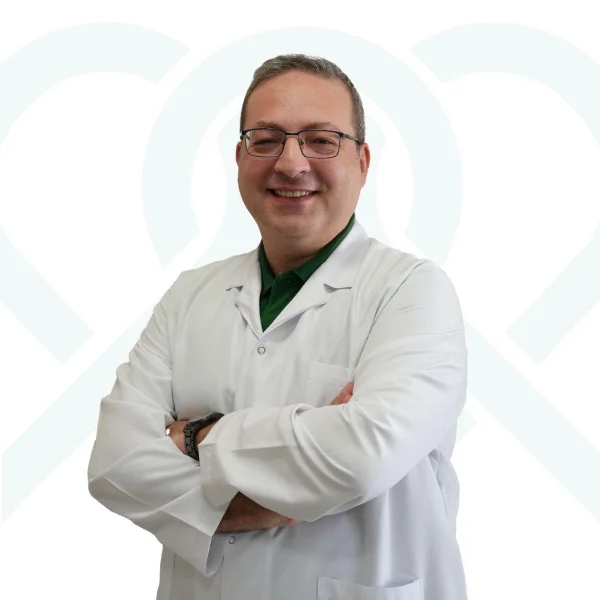
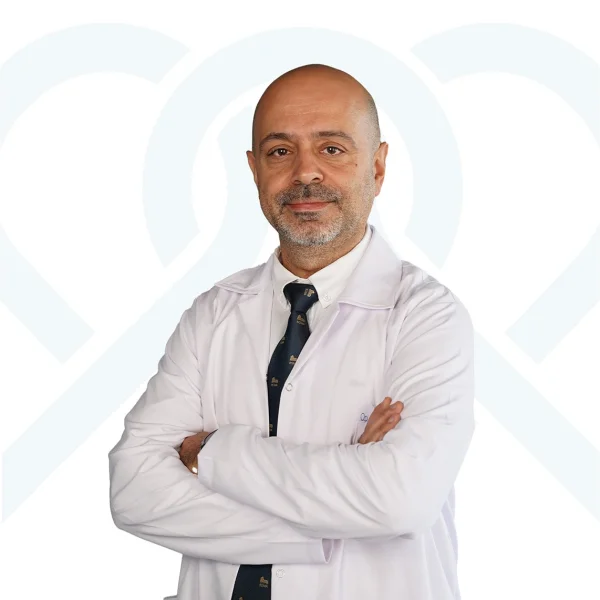
At the Koru Hospital Plastic, Reconstructive, and Aesthetic Surgery department, our specialist physicians offer comprehensive treatment services to their patients with the most up-to-date surgical techniques and advanced technology, across a wide spectrum from reconstructive surgery to aesthetic applications. By creating personalized treatment plans in line with each patient's individual needs and expectations, the goal is to achieve the best possible results.
Our Doctors
Estetik ve rekonstrüktif cerrahide kişiye özel çözümler sunan uzmanlarımız