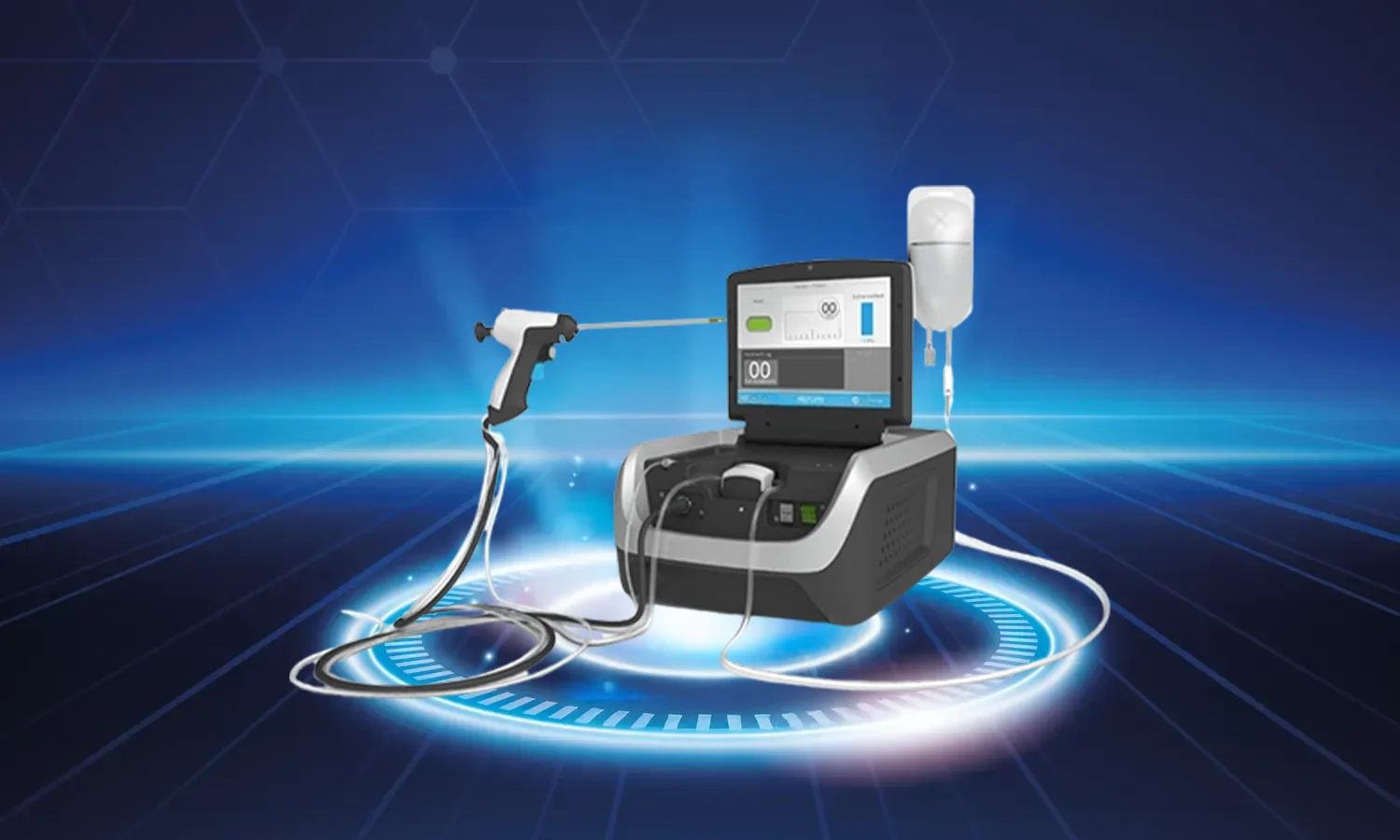
Fractional carbon dioxide (CO2) laser is an advanced laser treatment method that initiates skin regeneration and healing processes. By applying laser energy in microscopic fractions, it ensures effective rejuvenation in targeted areas while protecting the surrounding tissue. Used in a wide range of applications from wrinkle treatment to acne scars, and from spot treatment to skin tightening, this technology is one of the aesthetic treatments accepted as the gold standard in dermatology and plastic surgery. Avoiding the long recovery periods of traditional ablative lasers, the fractional CO2 laser is ideal in terms of both efficacy and safety. As one of the most successful technologies developed in the field of skin rejuvenation, it has become a preferred treatment option for millions of people.
What is a Fractional CO2 Laser?
The fractional CO2 laser is based on the application of a carbon dioxide laser with a wavelength of 10,600 nanometers in fractional mode. Unlike traditional laser treatments, it does not treat the entire skin surface, but only microscopic points placed at specific intervals. The healthy tissue islands remaining in between act as biological reservoirs that support rapid healing. Thanks to this approach, the efficacy of full-surface ablative lasers is achieved while the recovery time is significantly shortened. Laser energy is directed toward the water absorbed by the skin, creating microscopic thermal columns that both remove damaged tissue on the surface and stimulate deep collagen fibers to initiate the regeneration process.
Working Principle
The mechanism of action of the fractional CO2 laser consists of the following stages:
- Creating microthermal damage: The laser beam creates microscopic treatment columns on the skin.
- Collagen denaturation: Existing collagen fibers in the skin shrink due to the heat effect.
- Triggering regeneration: The body begins to produce new collagen and elastin to repair the damaged areas.
- Tissue remodeling: Over months, the skin tissue regenerates, gaining a firmer and smoother appearance.
- Pigment renewal: Irregular pigmentation in the upper layer is cleared, and new, uniform pigmentation is formed.
- Angiogenesis stimulation: Skin nourishment is improved through the formation of new capillaries.
In Which Cases Is It Used?
The fractional CO2 laser has a wide range of indications:
- Anti-aging treatments: Fine lines, deep wrinkles, and skin sagging.
- Acne scars: Atrophic acne scars and enlarged pores.
- Surgical and traumatic scars: Reducing the appearance of old scars.
- Stria (stretch mark) treatment: Stretch marks formed after pregnancy and weight changes.
- Pigmentation issues: Sun spots, age spots, and melasma.
- Skin texture roughness: Smoothing of irregular skin surfaces.
- Actinic keratosis: Sun-related premalignant skin lesions.
- Genital rejuvenation: Treatment of vulvovaginal atrophy.
- Burn scars: Treatment of hypertrophic and atrophic burn scars.
- Xanthelasma: Removal of fat deposits around the eyes.
- Syringoma and milia: Removal of small skin growths.
Advantages of the Treatment
The clinical advantages provided by the fractional CO2 laser are quite comprehensive:
- Significant skin rejuvenation: Visible results can be achieved even in a single session.
- Rapid healing process: Much shorter recovery time compared to classic laser applications.
- Controlled depth: Treatment parameters can be customized according to skin type.
- Long-lasting effect: The collagen production process continues for months, and results are permanent.
- Versatile use: Ability to treat multiple skin problems in a single session.
- Applicability to non-facial areas: Areas such as the neck, décolleté, and back of the hands can also be treated.
- Side effect profile: A method with a low risk of side effects that can be safely applied in experienced hands.
- Integrated treatment opportunity: Can be combined with Botox, fillers, and other aesthetic applications.
- Cellular-level regeneration: Acts at depths that superficial skin care cannot reach.
Treatment Process
Before fractional CO2 laser treatment, a detailed skin evaluation is performed by a dermatologist. A personalized treatment plan is created by analyzing the patient's skin type, existing problems, and expectations. An anesthetic cream is applied to the treatment area before the procedure, and mild sedation is administered if necessary. The laser application takes between 20 and 60 minutes depending on the size of the area. During the treatment, the patient may feel a slight warmth and tingling. After the treatment, redness, mild swelling, and crusting lasting 5-7 days are observed on the skin. Special healing creams are used for the first few days, and the skin is kept moist. Full recovery is usually completed within 1-2 weeks. Results become more pronounced over time, and the collagen production process continues for 3-6 months. Depending on the need, 1-3 sessions can be applied, with 4-6 weeks usually waited between sessions. Patients gain a much smoother, firmer, and younger skin appearance after the treatment.
Points to Consider
Intense sun exposure, solarium use, and skin peeling procedures should be avoided for at least 4 weeks before treatment. Caution should be exercised when planning the procedure in cases such as active skin infection, history of herpes, isotretinoin use, and pregnancy. It is of great importance to use high-factor sunscreen, keep the skin moist, and apply the healing products recommended by the specialist in the post-treatment period. Evaluation should be done meticulously as there may be a risk of pigmentation in very dark skin types. A burning sensation on the skin for 24-48 hours after treatment is normal and can be relieved with cold applications. Makeup can usually be reapplied after 5-7 days. Regular sun protection is mandatory for the long-term success of the treatment.
Comparison with Other Laser Treatments
The fractional CO2 laser is more effective than non-ablative fractional lasers (Erbium:Glass, 1540 nm), although the recovery time is slightly longer. Compared to classic full-ablative CO2 lasers, it has both higher efficacy and a much shorter recovery time. While Erbium:YAG lasers show a more superficial effect, fractional CO2 provides both surface and deep tissue contribution. Although IPL (Intensive Pulsed Light) systems are effective for pigment and vascular lesions, fractional CO2 is superior in structural skin rejuvenation. While microneedling and radiofrequency applications are gentler alternatives, they cannot replace the fractional CO2 laser for advanced wrinkles and deep acne scars. The most appropriate technology should be selected by the physician, taking into account post-treatment expectations and skin type compatibility. In some cases, more comprehensive results are obtained by combining the fractional CO2 laser with other aesthetic treatments.
As Koru Hospital, we perform skin rejuvenation treatments at the highest standards in our dermatology and plastic surgery departments with our state-of-the-art fractional CO2 laser devices. With our expert physicians, personalized treatment protocols, and comprehensive follow-up programs, we offer reliable service for you to achieve healthy, young, and vibrant skin. We invite you to our center to experience the successful results that can be achieved when professional support and modern technology come together on your skin rejuvenation journey.