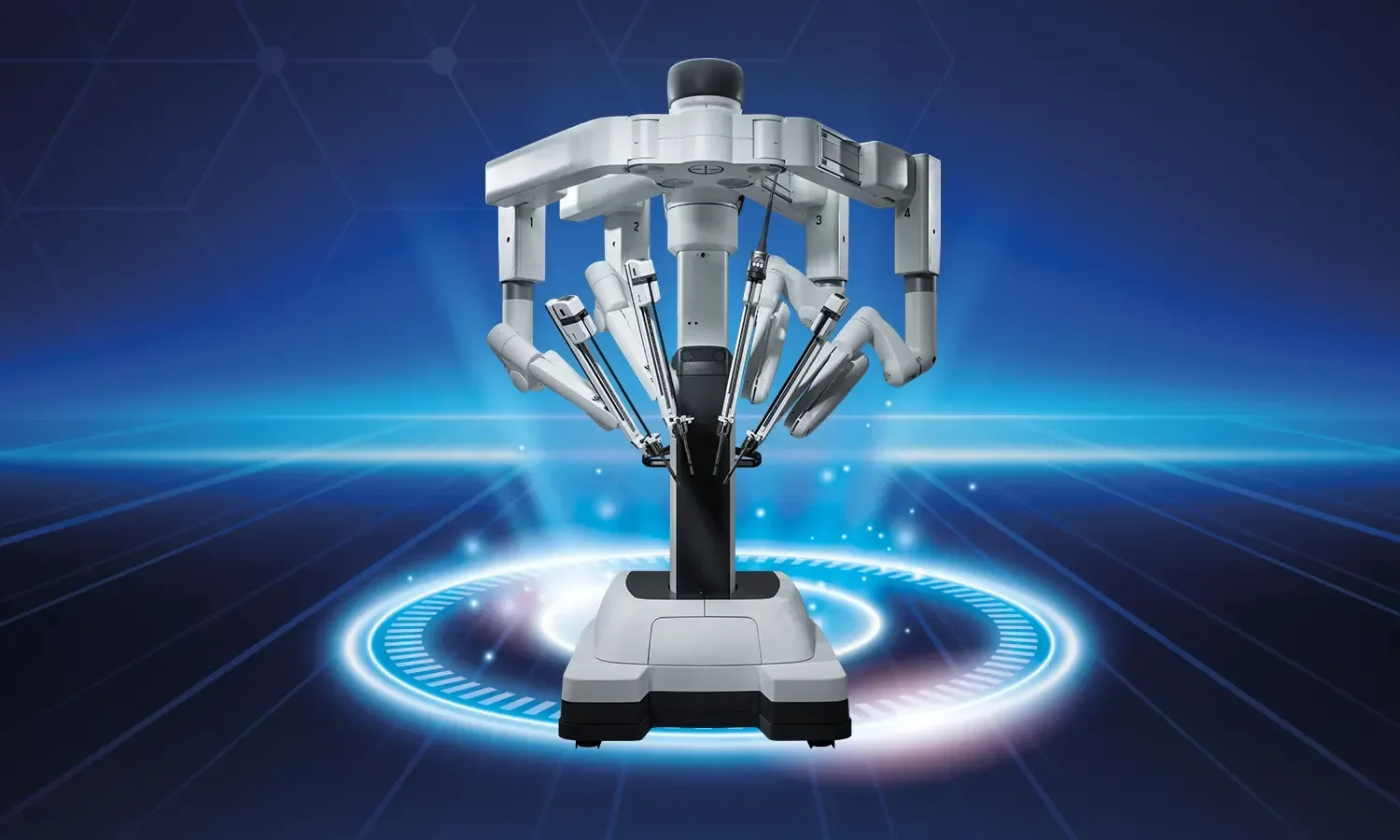
The Da Vinci Robot is an advanced robotic surgical system that allows the surgeon to perform operations with high precision. This system transfers the surgeon's hand movements to surgical instruments on a millimeter scale, enabling operations to be performed with smaller incisions and less tissue trauma compared to traditional open surgery. The robot itself does not perform the surgery automatically; the entire control of the procedure remains with the surgeon performing the operation. Robotic surgery is an approach that has become a standard in modern surgery by combining the surgeon's experience with the superior vision and precision provided by technology.
How Does the Da Vinci Robot Work?
The system consists of three main components. The surgeon console is the main unit where the operation is managed; the surgeon directs the robotic arms using hand and finger movements, accompanied by a three-dimensional, high-definition view. The patient cart houses the robot's four-armed structure; three arms carry surgical instruments, while the fourth carries a high-definition 3D camera. The imaging unit shows the surgeon the operative field magnified 10–15 times in three dimensions. Thanks to the system's tremor filtration and motion scaling features, the surgeon's natural hand tremors are eliminated, and movements are reflected to the instruments with precision.
The wrist-like joint structure at the tips of the robotic instruments (EndoWrist) offers a much wider range of motion than the human hand; this allows natural hand movements to be mimicked even in anatomically difficult-to-reach areas such as the narrow pelvic region. Thanks to the ergonomic design of the console, the surgeon experiences less fatigue during long surgeries and increased focus. Since all movements are digitally processed, both safety and precision are kept at the maximum level.
In Which Surgeries Is It Used?
- Urological surgery: Radical prostatectomy for prostate cancer, partial nephrectomy for kidney tumors, cystectomy and neobladder reconstruction for bladder cancer, kidney transplantation
- Gynecology and obstetrics: Hysterectomy, endometriosis surgery, myomectomy, tubal reconstructions, and oncological gynecological surgeries
- General surgery: Gallbladder, stomach, pancreas, colon, and rectal surgeries, obesity surgery, hernia repairs
- Cardiac and thoracic surgery: Mitral valve repairs, lung resections, mediastinal surgery, and thymectomy
- Oncological surgery: Tumor surgeries in anatomically difficult-to-reach areas
- Pediatric surgery: Minimally invasive approaches in selected pediatric patients
Advantages of Da Vinci Robotic Surgery
- Aesthetic superiority with small incisions and minimal skin scarring
- Less blood loss and postoperative pain
- Shorter hospital stay
- Rapid recovery and early return to daily life
- Increased visual clarity with three-dimensional, high-definition imaging
- Millimeter precision due to tremor elimination
- Detailed anatomical view allowing for the protection of delicate structures such as nerves and vessels
- Lower risk of infection and complications
- Reduced need for blood transfusion
- Better preservation of sexual and urinary functions (especially in urological and gynecological cases)
- Reflection of the surgeon's ergonomic comfort on surgical success
Differences Compared to Traditional Surgery
In open surgery, large incisions are made, the view is two-dimensional, and the recovery process can be long. Patients usually experience more pain and longer hospital stays. In laparoscopic surgery, incisions are smaller, but the view remains two-dimensional, and there is an unnatural relationship between the surgeon's hand movements and the tips of the instruments. Da Vinci robotic surgery offers small incisions, three-dimensional high-definition imaging, and very high precision without tremors. Damage to tissues is kept to a minimum; thanks to the wrist-like joint structure of the surgical instruments, natural hand movements can be mimicked in narrow and deep areas. These advantages have made robotic surgery the gold standard today, especially in prostate, kidney, uterine, and rectal surgeries.
Treatment Process
Before robotic surgery, the patient undergoes a detailed examination, and their general condition is evaluated with imaging tests and blood tests. The operation is planned after an anesthesia consultation. The surgery is performed under general anesthesia; several 0.5–1 cm incisions are made on the skin to insert the robotic arms and the camera. While the surgeon manages the procedure from the console, the team at the patient's bedside ensures safety between the robot and the patient and performs tasks such as changing instruments when necessary. Postoperative pain is usually mild, and patients can be discharged within 1–3 days depending on the type of surgery. While a return to light activities is possible in the first weeks, a period of 4–6 weeks is recommended for heavy physical activities.
Points to Consider
Robotic surgery may not be suitable for every patient; the decision should be made by evaluating factors such as the type of surgery, body structure, accompanying diseases, and previous surgical history. The success of the method is directly related to the surgeon's experience and robotic surgery certification. Meticulous adherence to the recommended rest period, nutrition plan, and follow-up examinations in the postoperative period affects the quality of the recovery process. Patients must inform the team in advance about their medication use, bleeding disorders, and special health conditions. Although rare, complications such as bleeding, infection, organ injury, or anesthesia-related issues may occur after robotic surgery; therefore, it is of great importance that it is performed in an experienced center.
Da Vinci Robotic Surgery at Koru Hospital
As Koru Hospital, we perform the Da Vinci system safely and with high success rates, thanks to our experienced surgeons in the field of robotic surgery and our advanced technology-equipped operating rooms. Our expert teams in general surgery, urology, gynecology, cardiovascular surgery, and other surgical branches prepare treatment plans specific to each patient and stand by our patients throughout the entire process, from preoperative evaluation to postoperative follow-up. We manage the postoperative recovery process in the best possible way with our modern intensive care units, experienced anesthesia team, and physical therapy support services. Thanks to our multidisciplinary approach, the treatment plan is created with a holistic perspective by receiving support from all necessary medical specialties. With this advanced technology offered by modern medicine, we aim to deliver all the advantages of minimally invasive surgery to our patients, keep their postoperative comfort and quality of life at the highest level, and support them in regaining their health in the shortest time and in the safest way possible.